

Is Dopamine Detox Safe for Mental Health or Just a Trend? The Real Truth
Scrolling for hours, switching between apps, and constantly needing something to watch or check has become normal. That’s exactly why dopamine detox is getting so much attention.
People say it can reset your brain, improve focus, and fix mental fatigue. But before trying it, one important question comes up: is dopamine detox safe for mental health, or can it actually make things worse?
The truth is more practical than what you see online, and it’s important to understand it correctly instead of following trends blindly.
Is Dopamine Detox a Myth? Here’s the real truth
What Dopamine Detox Really Means (No Myths)

Dopamine detox does not remove dopamine from your brain. According to Harvard Health Publishing, dopamine is a key chemical involved in motivation, reward, and learning.
What people call detox is actually reducing high-stimulation habits like:
- Social media overuse
- Endless scrolling
- Junk food cravings
- Binge watching
- Constant notifications
So the real goal is not detox—it’s reducing overstimulation and improving behavior patterns over time.
Phone addiction ruining your productivity? Here’s what actually works.
Is Dopamine Detox Safe for Mental Health?

Yes, dopamine detox is safe for mental health when done in a balanced way, but harmful when taken too far.
A practical approach can help you improve focus and reduce mental overload. However, extreme restriction can create stress instead of clarity, which is why experts recommend moderation.
As highlighted by the National Institute of Mental Health (NIMH), managing stress through realistic lifestyle changes is far more effective than extreme behavior control.
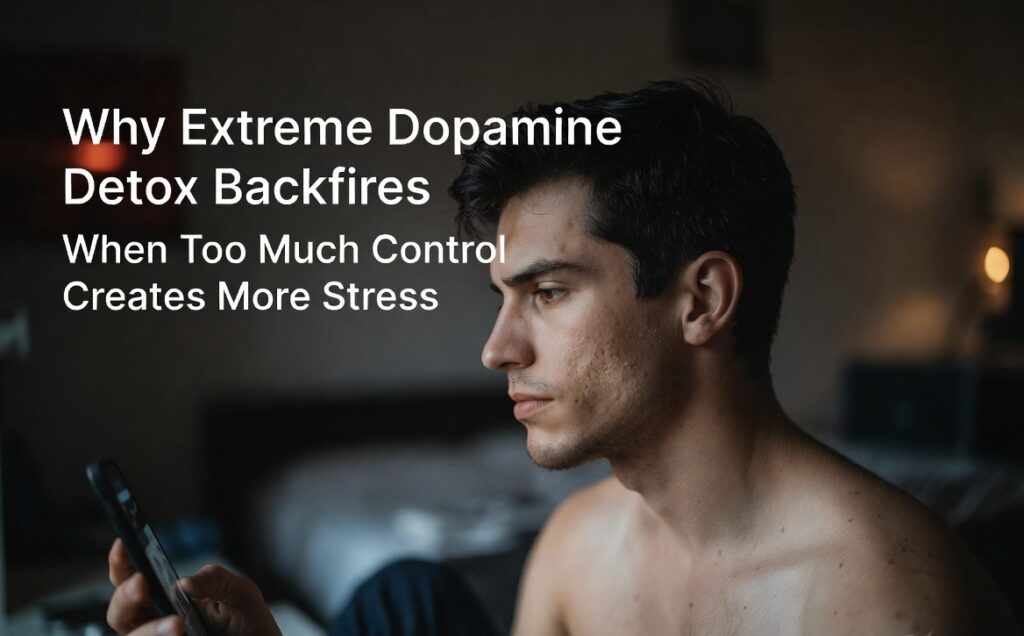
Why Extreme Dopamine Detox Backfires
This is where most people get it wrong.
Many follow strict versions like cutting off all entertainment, avoiding phone use completely, and isolating themselves. In reality, this often leads to restlessness instead of calmness.
For example, someone who suddenly stops using their phone for a full day may feel irritated and distracted instead of focused. That’s because the brain is used to constant stimulation and doesn’t adjust instantly.
The American Psychological Association (APA) explains that sudden lifestyle changes can increase stress if not managed properly.
Is dopamine detox harmful? Here’s the real truth
Real Impact on Mental Health (What Actually Happens)

When dopamine detox is misunderstood, it can lead to:
- Restlessness: The brain reacts to sudden change
- Mental Pressure: Strict rules increase stress
- Frustration: Expectations don’t match reality
- Disconnection: Reduced interaction can impact emotional balance
According to the Centers for Disease Control and Prevention (CDC), managing daily stress and maintaining social connection are essential for mental well-being.
What Research and Experts Actually Say

There is no scientific proof that dopamine detox resets your brain instantly. Instead, experts focus on long-term behavior changes.
The World Health Organization (WHO) states that balanced routines, proper sleep, and controlled digital exposure are key factors in maintaining mental health.
Similarly, research insights from the National Center for Biotechnology Information (NCBI) show that dopamine regulation is influenced by consistent habits, not short-term restriction.
A Smarter Approach That Actually Works

Instead of extreme detox, follow a realistic system that fits your daily life.
Reduce Gradually
Cut down usage step by step instead of removing everything at once. Gradual change helps your brain adapt naturally.
Replace, Don’t Remove
Your brain needs alternatives. Replace high-stimulation habits with healthier ones like reading, walking, or focused work.
Use Focus Windows

Create short distraction-free periods of 1–2 hours daily. This improves attention without creating pressure.
Keep Balanced Enjoyment
Healthy enjoyment supports mental stability. Total restriction is not necessary.
Stay Consistent
According to CDC habit-building guidance, consistent small changes are more effective than extreme short-term efforts.
What Actually Works Better Than Dopamine Detox

Instead of following trends, focus on proven habits supported by research:
- Controlled screen time instead of zero screen
- Simple daily routines
- Regular physical activity
- Better sleep schedule
- Mindful breaks during work
The WHO mental health recommendations emphasize routine, balance, and lifestyle adjustments for long-term well-being.
Final Insight
Dopamine is not the problem. Overstimulation is.
Once you reduce unnecessary stimulation gradually, your focus and mental clarity improve naturally without extreme detox methods.
Conclusion
So, is dopamine detox safe for mental health?
Yes, but only when done in a balanced and realistic way. Extreme approaches can increase stress, anxiety, and frustration.
If your goal is better focus and mental clarity, the smarter approach is simple: reduce overstimulation, build better habits, and stay consistent. This approach is supported by trusted health organizations and long-term research.
FAQs
Is dopamine detox safe for mental health long term?
Yes, if done in moderation and supported by healthy routines.
Can dopamine detox improve focus?
Yes, mainly because it reduces distractions—not because it resets dopamine levels.
How long should I do dopamine detox?
Short daily focus periods are more effective than long detox sessions.
Can extreme dopamine detox be harmful?
Yes, it can increase stress and mental pressure if done incorrectly.
Do I need to stop using my phone completely?
No. Controlled usage works better than complete restriction.
What is the safest method?
Gradual habit change with balanced routines and realistic limits.
© NexafitX — Helping people build healthier lifestyles worldwide