
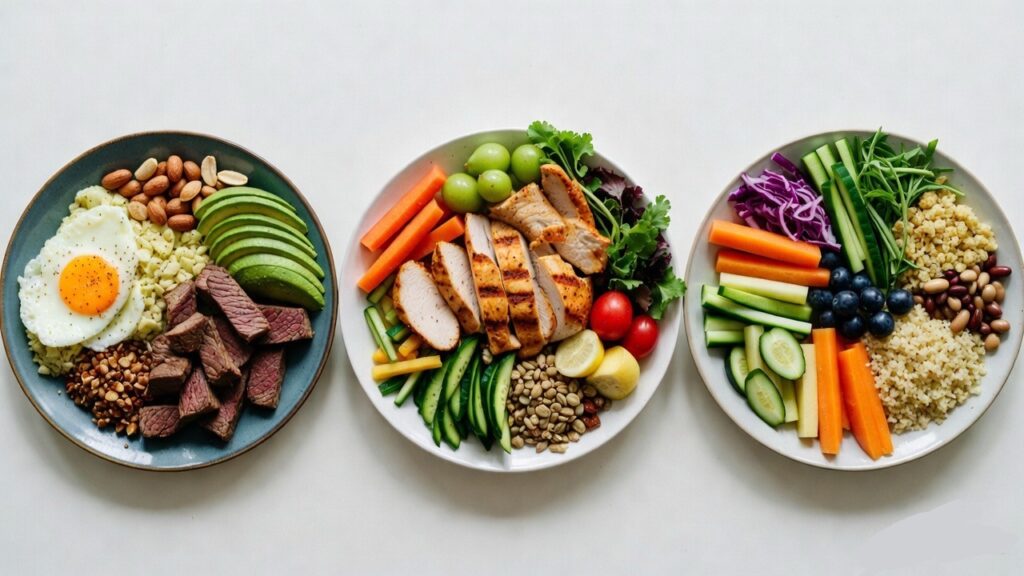
Understanding Keto, Paleo, and Plant-Based Diets
With so many diet trends, it can be confusing to choose the right one. Here’s a clear overview:
- Keto Diet: Focuses on high fat, moderate protein, and very low carbohydrates (usually less than 50 grams per day) to encourage the body to enter ketosis, a state where fat is used for energy instead of carbs. Ideal for quick weight loss and managing blood sugar levels. Beginner Tip: If you’re planning to start the keto diet, the Ultimate Keto Bundle offers helpful guides, recipes, and meal plans to make the process easier for beginners.
- Paleo Diet: Based on the eating habits of our ancestors, emphasizing whole foods, lean meats, fish, fruits, vegetables, nuts, and seeds while avoiding processed foods, refined sugars, and grains. It promotes nutrient-dense eating and reduces inflammatory foods.
- Plant-Based Diet: Focuses mainly on plant foods like vegetables, fruits, whole grains, legumes, nuts, and seeds. It may exclude all animal products (vegan) or just reduce meat intake. This diet is linked with heart health, longevity, and reduced environmental impact.
Health Benefits of Each Diet
( The Ultimate Beginner’s Guide to Home Workouts Without Equipment, Get full details ➡️ )
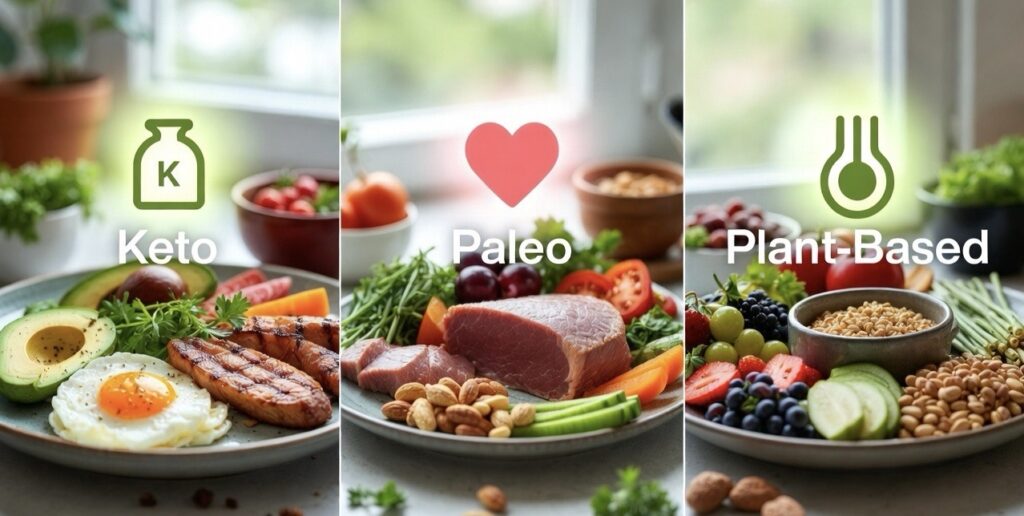
- Keto: Can support rapid weight loss, improved insulin sensitivity, and reduced blood sugar spikes. Studies show potential benefits for neurological conditions like epilepsy. Source: NCBI
- Paleo: Encourages consumption of nutrient-rich whole foods, reduces processed foods, and may lower inflammation and blood pressure. Some studies suggest improvements in glucose tolerance and lipid profiles. Source: NCBI
- Plant-Based: Rich in fiber, antioxidants, and vitamins; supports cardiovascular health, healthy weight management, and reduced risk of type 2 diabetes and certain cancers. Source: WHO
Potential Drawbacks to Consider
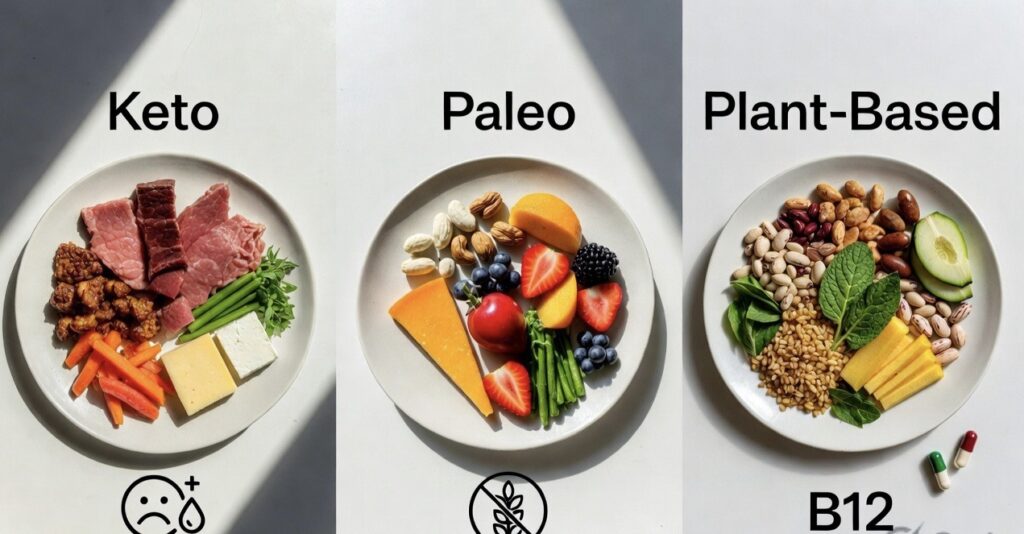
- Keto: Highly restrictive; may lead to nutrient deficiencies, constipation, or “keto flu” during the first week. Long-term effects require careful monitoring.
- Paleo: Excludes whole grains and legumes, which are important fiber sources. Can be expensive and difficult to sustain.
- Plant-Based: May require supplements like B12, vitamin D, omega-3 fatty acids, or iron, especially for vegans. Careful planning is needed to ensure sufficient protein intake.
How to Choose the Right Diet for You

Here’s a step-by-step approach:
- Identify Your Goals: Weight loss, muscle gain, heart health, mental clarity, or sustainable lifestyle.
- Evaluate Your Lifestyle: Consider work schedule, cooking skills, travel, and budget. A highly restrictive diet may not be practical long-term.
- Assess Health Conditions: Consult a doctor if you have diabetes, high cholesterol, kidney issues, or digestive concerns.
- Start Gradually: Introduce changes slowly; for example, begin with low-carb meals before transitioning fully to keto, or try plant-based meals a few times a week. Helpful Resource: If you want structured keto meal ideas and beginner guides, the Ultimate Keto Bundle provides practical recipes and step-by-step guidance.
- Track Progress: Monitor weight, energy levels, digestion, and overall wellbeing. Adjust diet based on how your body responds.
Practical Tips for Long-Term Success
- Plan meals in advance to avoid processed foods or unhealthy snacks.
- Include a variety of foods to cover essential nutrients.
- Stay hydrated and maintain regular physical activity.
- Consider supplements where necessary, such as B12 for plant-based diets or electrolytes for keto.
- Listen to your body—adjust macronutrients or meal timing to suit energy needs and lifestyle.
- Join online communities or consult dietitians for guidance and motivation. Extra Resource: For those interested in following a structured keto plan, the Ultimate Keto Bundle includes beginner-friendly guides, recipes, and meal plans to help you get started.
Scientific References and Guidelines
These organizations provide reliable guidance on nutrition and healthy diets:
- World Health Organization (WHO) – Healthy Diet
- Centers for Disease Control and Prevention (CDC) – Nutrition
- National Institutes of Health (NIH) – Keto Diet Research
- NCBI – Paleo Diet Studies
Conclusion
There is no universal “best” diet. Keto, Paleo, and Plant-Based diets each offer unique benefits and challenges. Choosing the right one depends on your health goals, lifestyle, and long-term sustainability. Always consult healthcare professionals before making major dietary changes, focus on balance and nutrient diversity, and prioritize habits you can maintain in the long run.
© NexafitX — Helping people build healthier lifestyles worldwide.
( Meal Planning Tips for Better Nutrition and Weight Control: Get full details ➡️ )