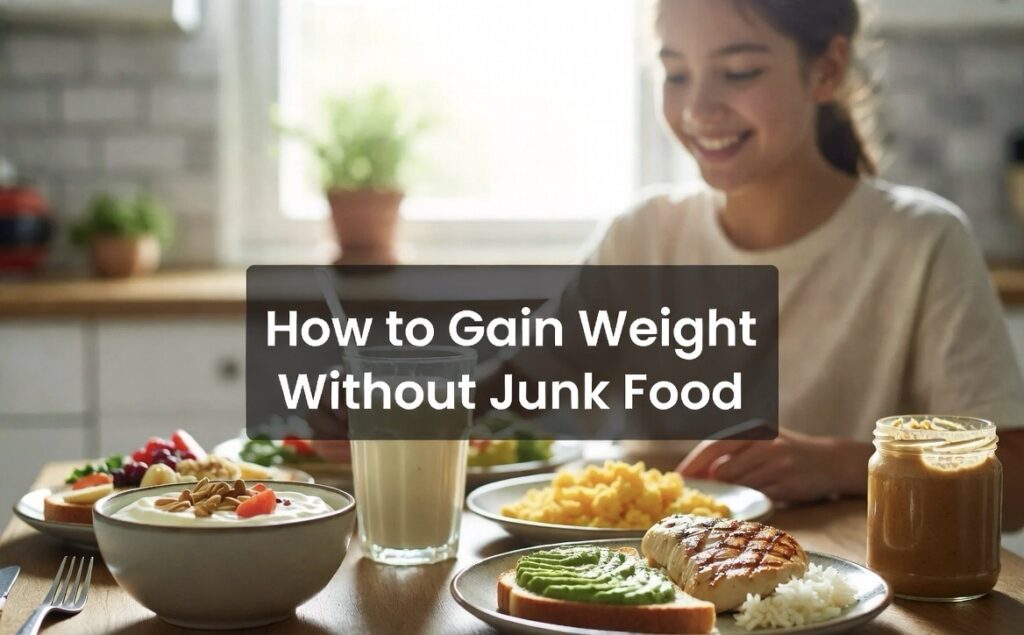
How to Gain Weight Without Junk Food (Simple Tips for Healthy Weight Gain)
Trying to gain weight sounds easy until you actually try doing it.
People usually assume the solution is simple: eat burgers, fries, pizza, sugary snacks, and wait for the scale to move. Sure, junk food may help you gain weight quickly, but it often comes with low energy, poor digestion, and that heavy sluggish feeling nobody really wants.
If you are searching for how to gain weight without junk food, you are probably looking for something healthier and more realistic. Maybe you want to feel stronger, build some healthy body weight, or simply stop feeling too skinny without eating processed food all day.
The good news is, healthy weight gain is possible. You just need a smarter approach.
Nutrition guidance from the CDC also points toward a balanced eating pattern built around nutrient-rich foods instead of heavily processed calories. That idea matters for healthy weight gain too, not just weight loss.
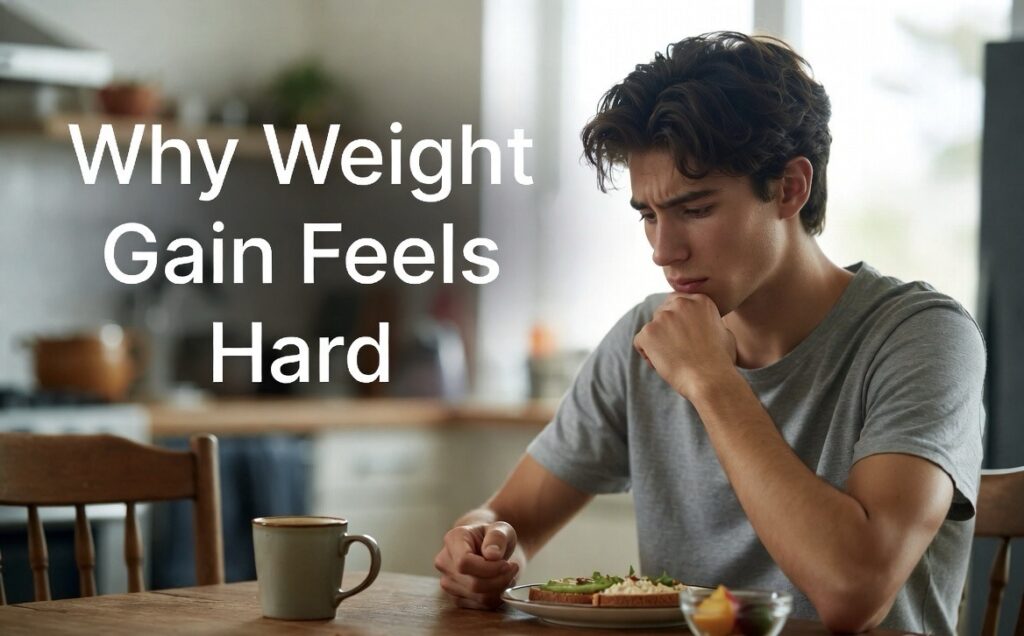
Why Gaining Weight Can Feel Surprisingly Hard
Honestly, gaining weight can feel frustrating.
You might feel like you are eating enough, but somehow your body stays exactly the same. Meanwhile, someone else skips meals and still gains weight without trying. It does not always feel fair.
In many cases, the problem is not that you are “broken” or doing everything wrong. Small habits quietly add up.
Common reasons healthy weight gain feels difficult include:
- Fast metabolism
- Skipping meals because of work or busy schedules
- Eating healthy but too little
- Low appetite
- Not enough protein or calorie-dense foods
- Stress affecting hunger levels
A lot of people think they eat a lot until they actually look at their meals properly. Breakfast becomes coffee, lunch is small, dinner does all the work, and snacks barely exist. That pattern makes healthy weight gain much slower than expected.
What Healthy Weight Gain Actually Looks Like
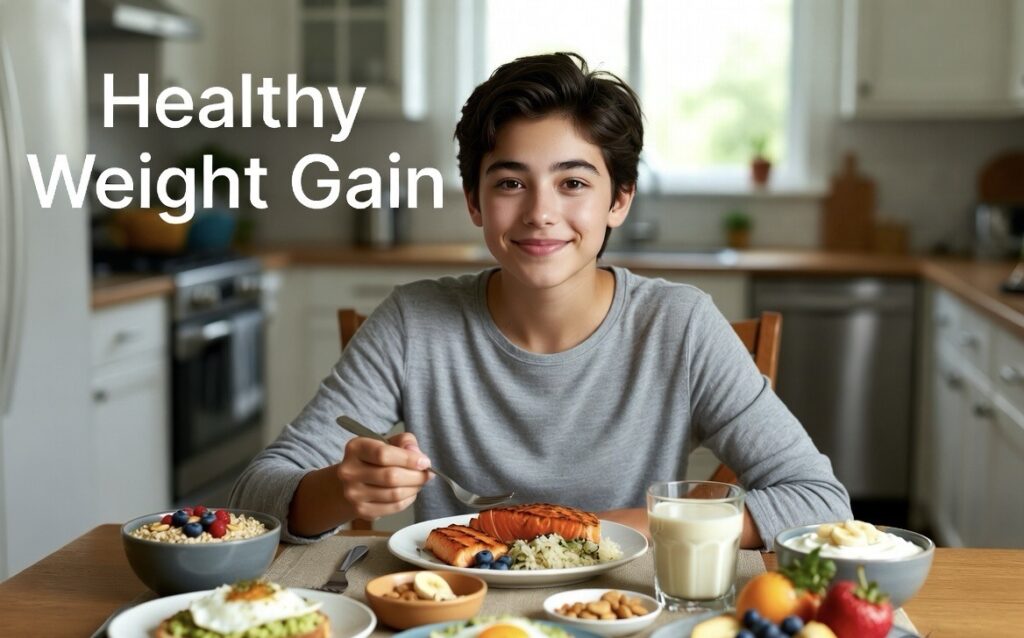
Before changing your diet, it helps to clear up one common misunderstanding.
Healthy weight gain is not about eating anything and everything.
Most people are not trying to gain random body fat. They usually want:
- A stronger body
- Better muscle tone
- More energy
- A healthier overall look
That usually means giving your body enough calories while still eating nutritious foods.
Think of it this way: if your meals are too light, your body does not have much extra fuel to grow. But if every calorie comes from processed food, you may gain weight without feeling healthier.
How to Gain Weight Without Junk Food: Simple Changes That Actually Help
1. Eat More Calories Without Making Meals Feel Huge
This is where many people struggle.
To gain weight naturally, your body needs extra calories. But forcing giant meals usually becomes exhausting after a few days.
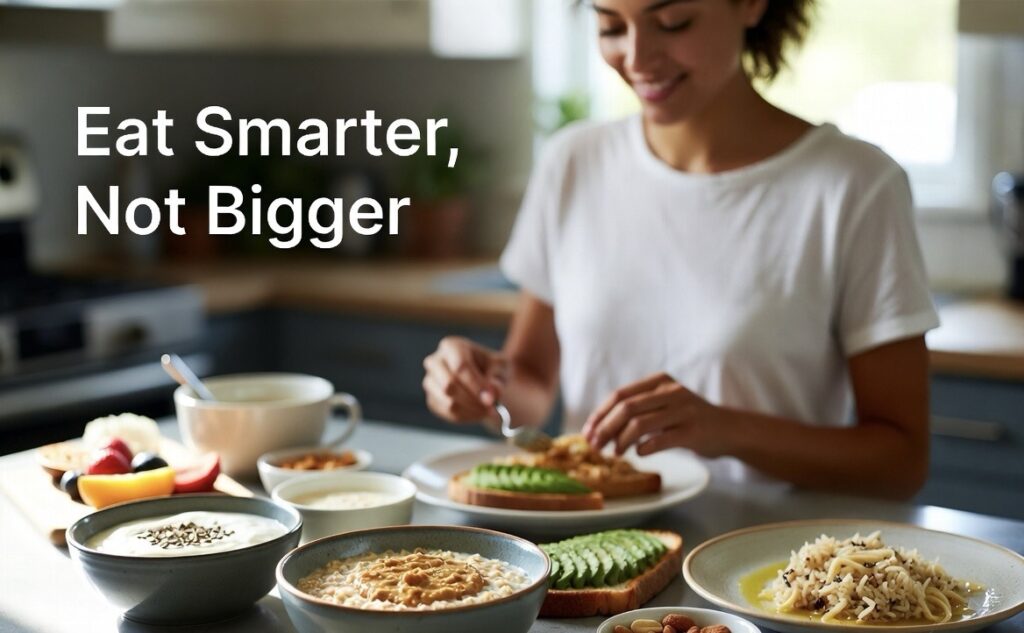
A better option is making normal meals slightly more calorie-dense.
Small upgrades work surprisingly well:
- Add peanut butter to oatmeal
- Use olive oil in rice, pasta, or salads
- Add avocado to sandwiches or meals
- Choose full-fat yogurt instead of low-fat
- Snack on nuts, seeds, or trail mix
These changes may seem small, but over a few weeks they can quietly make a real difference.
2. Stop Treating Breakfast Like It Does Not Matter
If your goal is healthy weight gain, skipping breakfast is probably slowing things down.
You are basically removing one full chance to eat from your day.
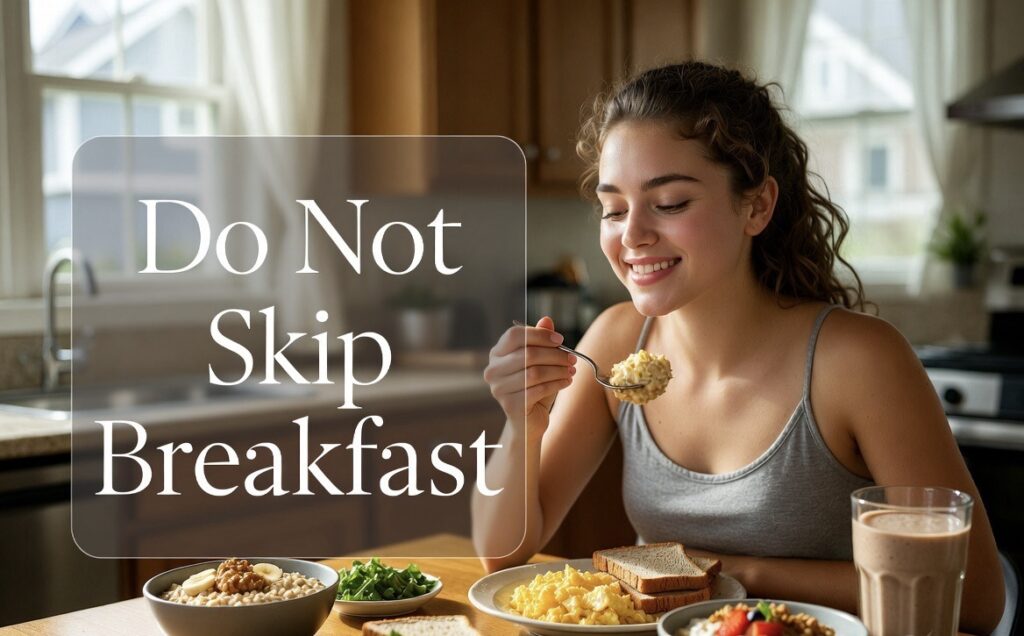
A good breakfast for healthy weight gain does not need to be complicated.
- Oatmeal with banana and peanut butter
- Eggs with whole grain toast
- Greek yogurt with granola and fruit
- A smoothie with oats, milk, banana, and yogurt
The goal is simple: start eating earlier so your body has more chances to get enough calories during the day.
3. Add Protein to Every Meal
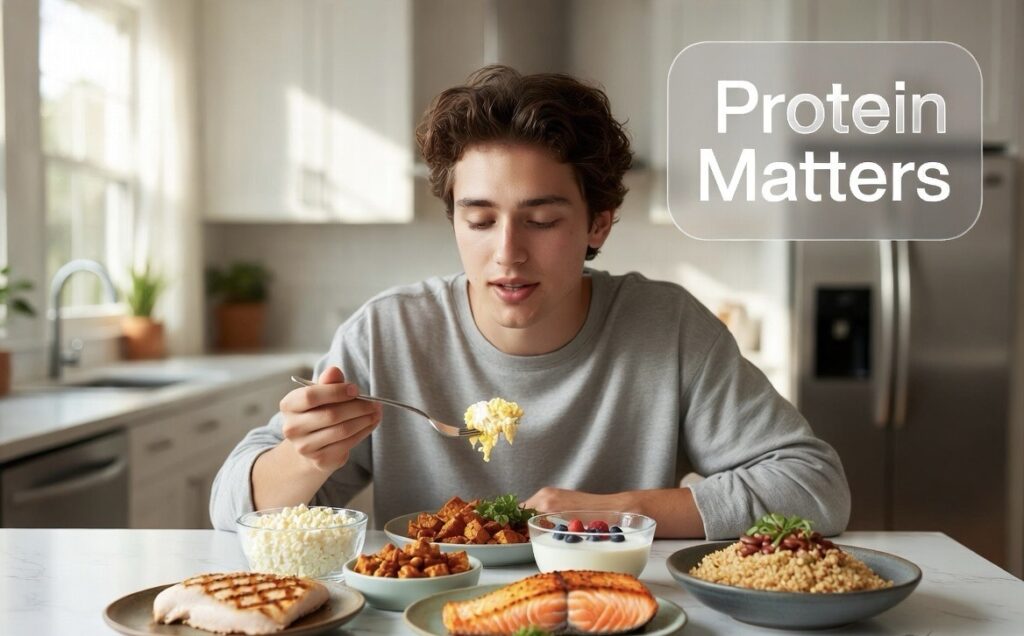
If you want to gain weight naturally without relying on junk food, protein matters more than people think.
It helps support muscle growth and healthy body weight, especially if you are active or doing basic strength training.
Good protein options include:
- Eggs
- Chicken
- Salmon
- Greek yogurt
- Cottage cheese
- Beans and lentils
- Tofu
- Lean meat
NHS healthy weight guidance also recommends balanced eating habits, which usually means getting enough protein, healthy fats, and carbohydrates instead of relying on extreme diets.
4. Drink Calories When Eating Feels Difficult

Some people simply do not enjoy eating large portions.
And honestly, that is okay.
If your appetite is low, drinking calories can make things easier.
A homemade smoothie is often one of the easiest ways to increase calories without feeling too full.
A simple combination could include:
- Milk or plant milk
- Banana
- Peanut butter
- Oats
- Greek yogurt
- Honey
You get protein, healthy fats, carbs, and extra calories in one go. It feels much easier than forcing another heavy meal.
5. Eat More Often Instead of Eating Bigger Portions
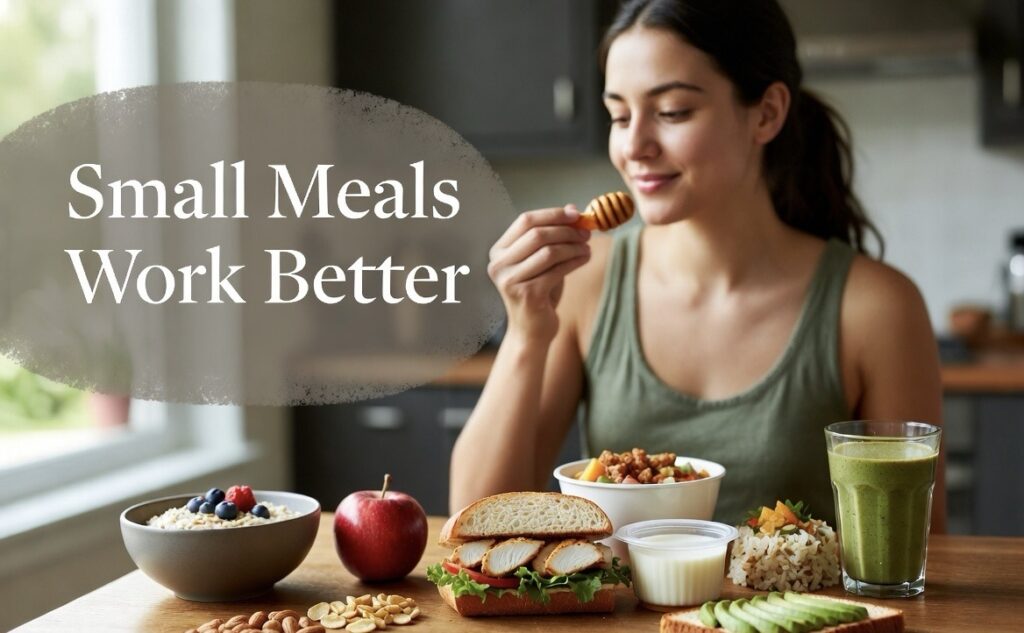
Trying to eat giant meals can feel overwhelming fast.
Sometimes eating smaller meals more often works better.
A simple routine might look like this:
- Breakfast
- Morning snack
- Lunch
- Evening snack
- Dinner
- Small bedtime snack
This approach often feels more manageable, especially if you naturally get full quickly.
Best Foods to Gain Weight Without Junk Food
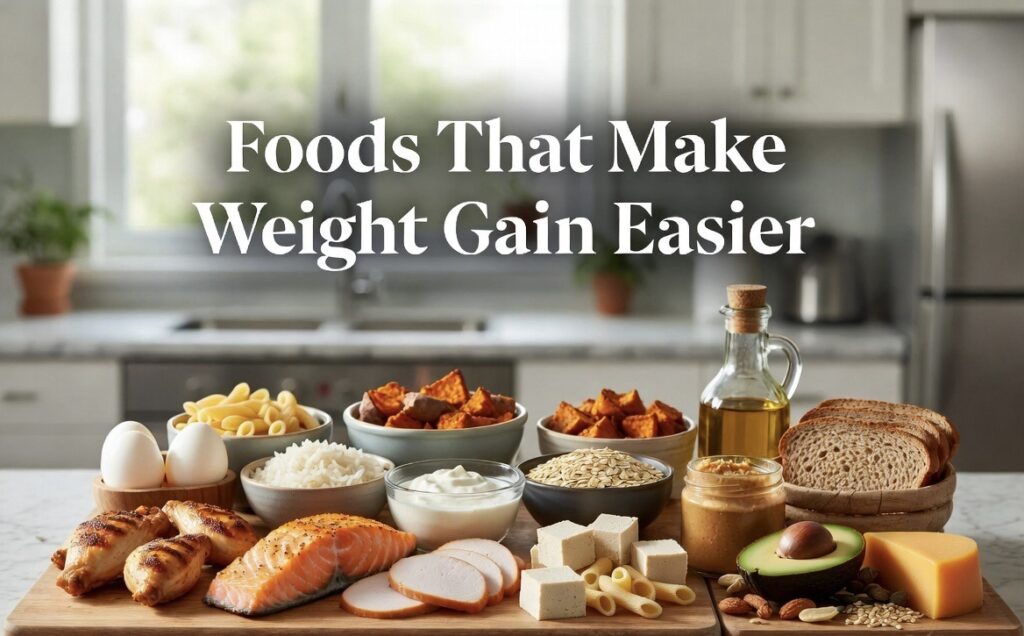
You do not need expensive “health foods” to gain weight in a healthy way.
Regular foods work perfectly fine when eaten consistently.
Protein Foods
- Eggs
- Chicken thighs
- Salmon
- Turkey
- Greek yogurt
- Beans
- Tofu
Healthy Carbs
- Rice
- Potatoes
- Sweet potatoes
- Oats
- Whole grain bread
- Pasta
Healthy Fat Sources
- Avocados
- Olive oil
- Peanut butter
- Nuts and seeds
- Cheese in moderation
These foods make how to gain weight without junk food much more realistic because they provide calories along with nutrition.
How Fast Can Healthy Weight Gain Actually Happen?

One reason many people give up and go back to junk food is simple: expectations become unrealistic.
It is easy to think you should see a major difference within a week or two. But healthy weight gain usually does not work that way.
For most people, progress happens gradually. And honestly, that is usually a good sign. Slow and steady changes often feel easier to maintain and tend to feel healthier overall.
NHS healthy weight guidance also leans toward gradual, balanced eating habits instead of extreme approaches, since long-term routines are usually easier to maintain.
If you suddenly start overeating or force huge amounts of food just to gain weight faster, you may end up feeling bloated, uncomfortable, or completely tired of the routine after a few days.
A more practical approach is increasing calories gradually, eating consistently, and giving your body time to adjust. Small improvements repeated daily usually work better than trying to rush the process.
Small Habits That Quietly Make Weight Gain Easier

Sometimes it is not about eating dramatically more. Tiny habits help more than people expect.
- Keep healthy snacks nearby
- Do not skip meals after busy workdays
- Add one calorie-dense food to each meal
- Drink smoothies when appetite feels low
- Stay consistent instead of eating heavily for only two days
Health advice published by the World Health Organization (WHO) also leans toward balanced eating habits over extreme food patterns for long-term health.
Should You Exercise While Trying to Gain Weight?

Actually, yes.
You do not need intense bodybuilding workouts, but basic strength training can help support healthier weight gain.
Simple exercises like squats, push-ups, resistance bands, or dumbbell workouts may help your body build more muscle alongside healthy body weight.
CDC physical activity guidance also suggests regular strength-focused movement for supporting muscle health and overall fitness.
Final Thoughts
Learning how to gain weight without junk food is mostly about consistency, better food choices, and a bit of patience.
You do not need fast food every day. You also do not need extreme diets or random supplements.
Eat enough, include protein, add healthy calorie-dense foods, and give your body time to respond.
Most importantly, do not judge progress too quickly. Healthy weight gain often looks slow before it starts feeling noticeable.
Disclaimer: This article is for general informational purposes only and is not a substitute for professional medical or nutritional advice. If you have any medical condition or specific dietary concerns, please consult a qualified healthcare professional or registered dietitian before making major changes to your diet or lifestyle.
© NexafitX — Helping people build healthier lifestyles worldwide.