
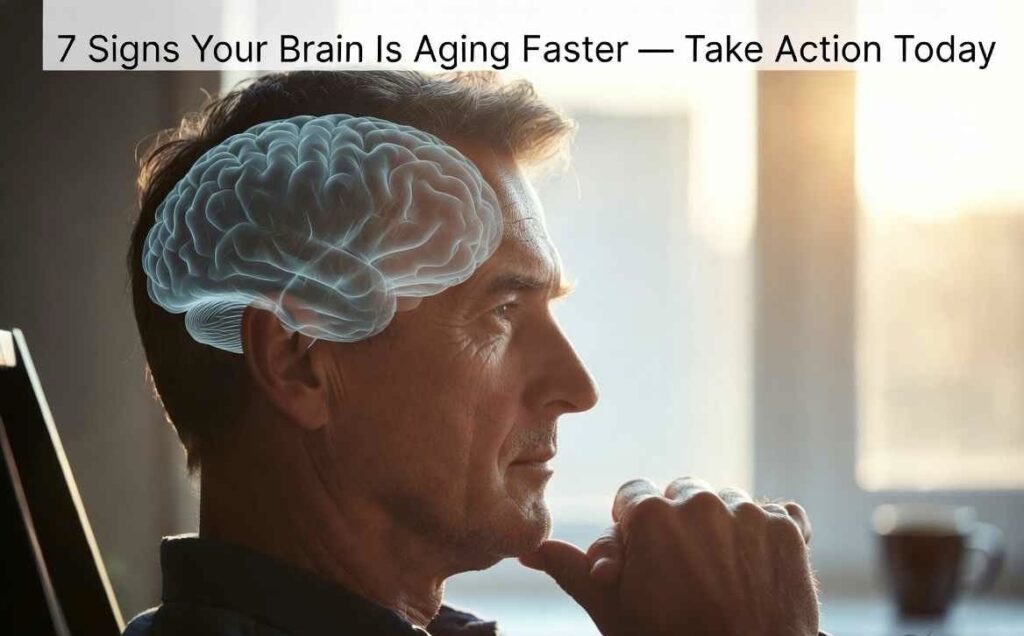
Ever had one of those moments where you walk into a room… and completely forget why you went there?
It happens. But if it’s happening more often lately, or you feel mentally slower than before, it might not just be “stress” or “a bad day.”
Sometimes, your brain starts showing signs of aging earlier than your body mostly because of daily habits we don’t even notice.
Signs Your Brain Might Be Aging Faster

You don’t need a medical test to notice the early signals. Your daily life already shows them.
1. You’re Forgetting Small Things More Often
Not just once in a while, but regularly like names, tasks, or where you kept something. Occasional forgetfulness is normal, but frequent memory lapses can be linked to cognitive changes (NIH research) 👉 https://www.nia.nih.gov/health/memory-forgetfulness-and-aging
2. Your Mind Feels “Foggy”
That heavy, slow feeling where thinking clearly feels like extra effort. This is often called brain fog and is commonly linked to sleep, stress, or diet.
3. Focus Isn’t What It Used to Be
You start something… then get distracted within minutes. Research shows attention span is heavily affected by digital overload.
4. You Take Longer to Think or Respond
Even simple decisions feel slower than before a common early cognitive slowdown sign.
5. Your Mood Feels Off
More irritation, low energy, or random mood shifts without a clear reason. Brain health and emotional balance are closely connected.
6. Your Sleep Doesn’t Feel Refreshing
You sleep, but still wake up tired. Poor sleep directly affects memory and thinking ability even the CDC highlights this 👉 https://www.cdc.gov/sleep/about_sleep/how_much_sleep.html
7. You Feel Mentally Drained Easily
Even without doing much, your mind feels tired. This can be linked to mental fatigue and lifestyle imbalance.
So, What’s Actually Causing This?

Here’s the honest part for most people, it’s not age. It’s lifestyle.
- Constant stress that never really switches off
- Eating more processed food than real food
- Irregular or poor sleep
- Too much screen time, too little real rest
- Hardly challenging your brain
In fact, the National Institute on Aging explains how everyday habits play a major role in long-term brain health 👉 https://www.nia.nih.gov/health/brain-health
Also, according to the World Health Organization, lifestyle factors like diet, physical activity, and mental engagement are key to maintaining cognitive health 👉 https://www.who.int/news-room/fact-sheets/detail/dementia
What Actually Helps (Simple Changes That Work)

You don’t need a complicated routine. Small shifts can make a noticeable difference.
Eat Better (Your Brain Feels It Fast)
Add simple foods like fruits, nuts, leafy greens, and omega-3 sources. A balanced diet supports brain function and reduces cognitive decline risk.
Start Using Your Brain More
Reading, solving problems, or learning new skills helps build stronger neural connections.
Fix Your Sleep First
If your sleep is off, everything else feels harder. Aim for consistent 7–8 hours.
How to sleep deeper and wake up refreshed Get Deep Sleep Secrets”
Move a Little Every Day
Even light exercise improves blood flow to the brain and supports memory.
Hate intense workouts? Try these easy low-impact exercises > Hate Intense Workouts? Try These Low-Impact Exercises
Cut Down Screen Overload
Too much scrolling reduces focus and attention span over time.
Too much screen time? Here’s what it does to your mind > Digital Detox Benefits for Mental Health
Calm Your Mind
Simple habits like deep breathing, short walks, or quiet time can help reduce stress and improve mental clarity.
A Simple Daily Reset (That Actually Feels Doable)

- Morning: Get sunlight + move a little
- Day: Work in focused blocks, avoid constant distractions
- Evening: Slow down, reduce screen time
- Night: Sleep on time, avoid late-night scrolling
Nothing extreme. Just consistent habits.
Final Thought
Your brain doesn’t suddenly slow down overnight. It gradually reflects how you live every day.
The good part? When you improve your habits, your mind starts responding faster than you expect.
So ask yourself honestly, have you been noticing any of these signs lately?
© NexafitX — Helping people build healthier lifestyles worldwide.